InterviewIthaca Reggae FestMichael Mazza
Interview: Michael Mazza, Ithaca Reggae Fest Co-Founder
The Ithaca Reggae Fest co-founder traces the festival to reggae nights at the old Haunt, explains the letter that came with the first sponsorship check, and details a sixth year headlined by John Brown's Body and Sister Nancy.
by
May 26, 2024
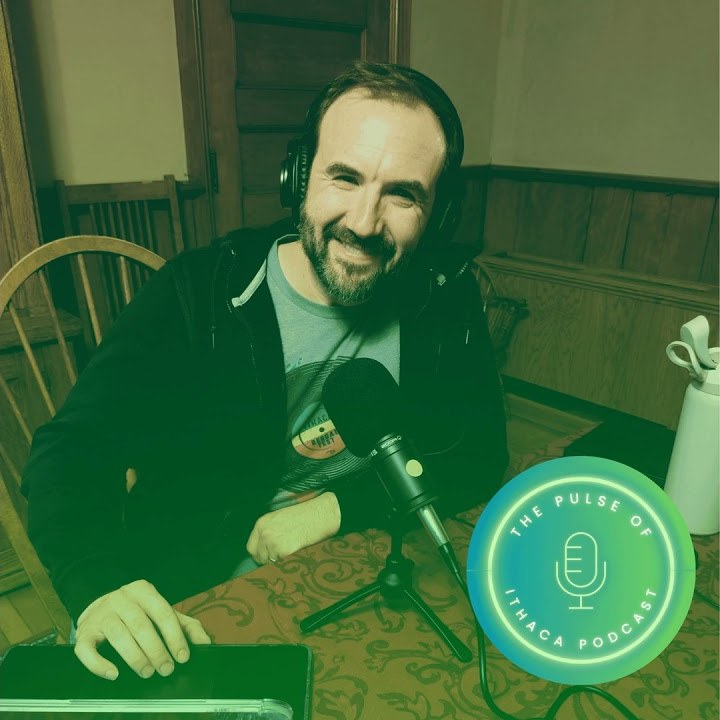
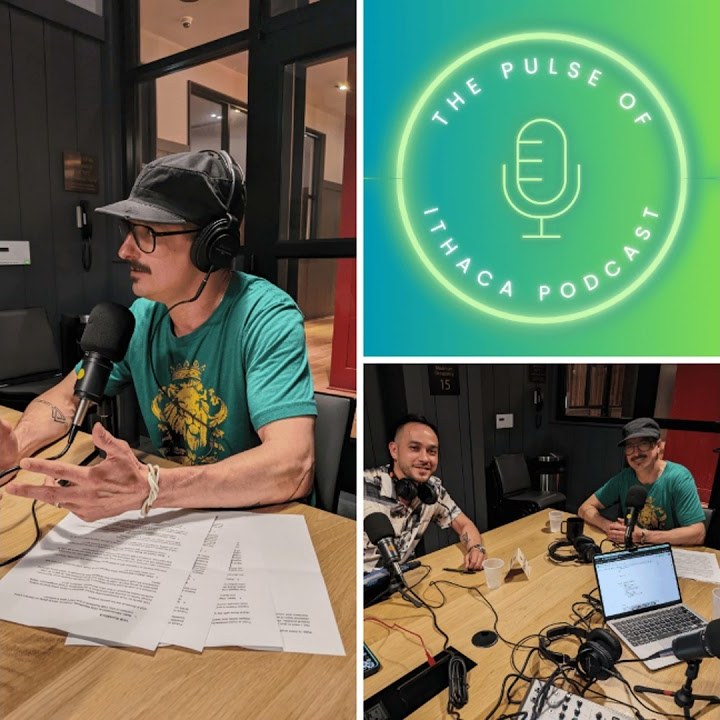
ITHACA, N.Y. — Michael Mazza, a co-founder of Ithaca Reggae Fest, sat for a 77-minute interview with the Pulse of Ithaca Podcast recorded in downtown Ithaca in May 2024, weeks before the festival’s sixth year at Stewart Park on June 21 and 22.
The detail he returns to is not a booking. It is a letter. When he and Kevin Kinsella went to ask a local venue owner for sponsorship money before the first festival in 2017, the answer came back as a question about the twenty-fifth.
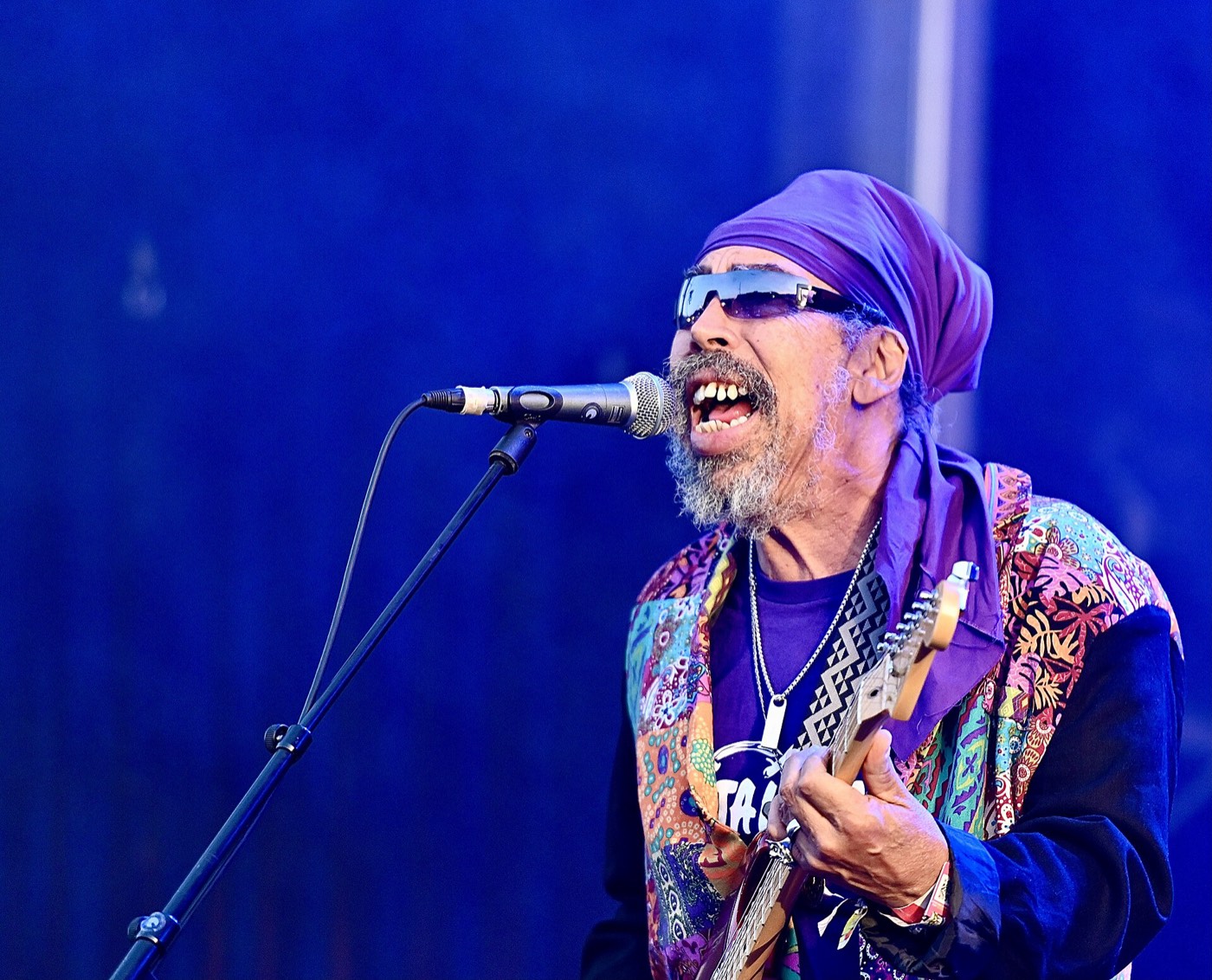
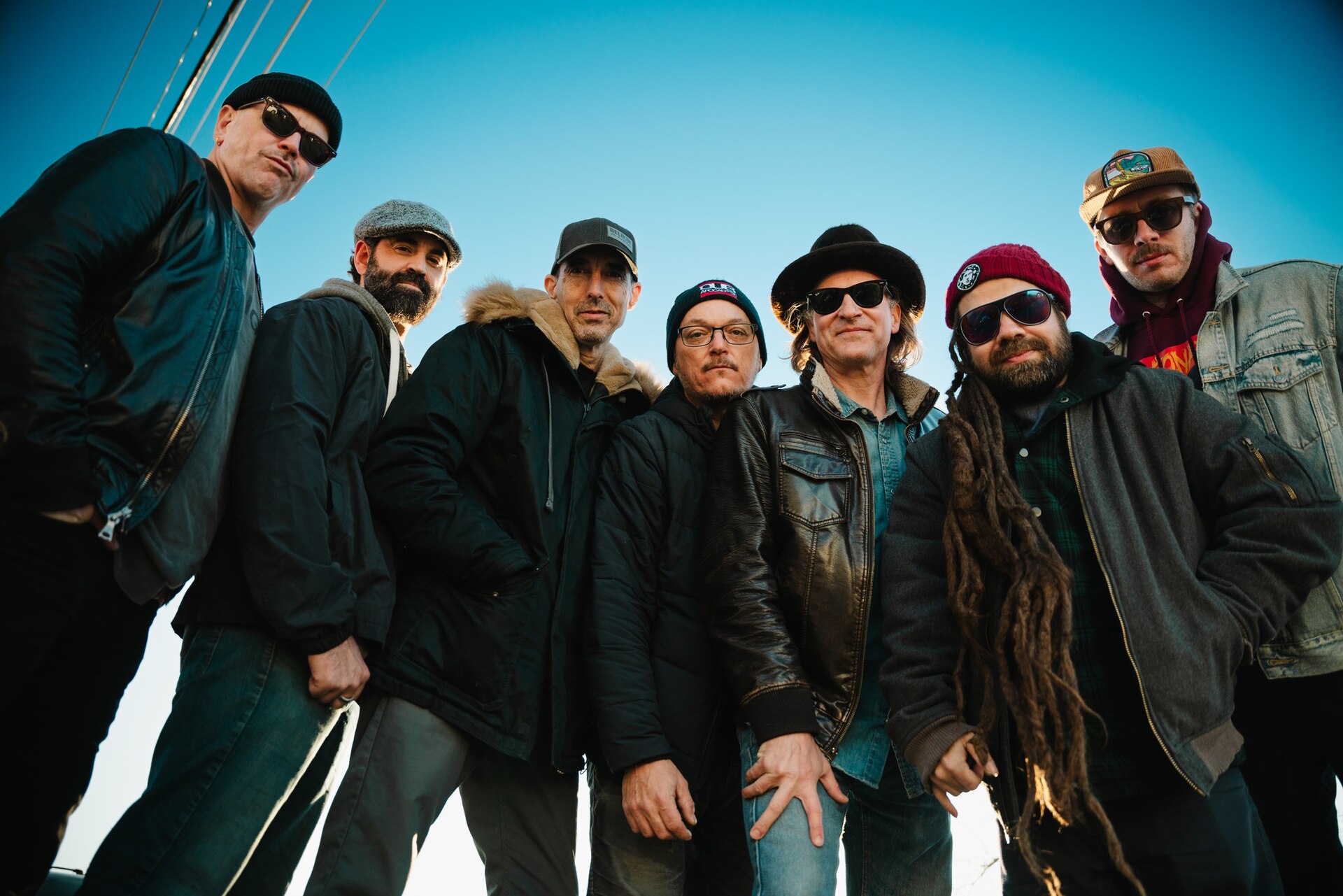
The sixth edition was headlined by John Brown’s Body, with Kinsella leading the band again, and by the Jamaican dancehall artist Sister Nancy. Friday’s welcome party at the park’s large pavilion was free. Episode 15 was published to the show’s YouTube channel on May 26, 2024, and is embedded in full below.
Backup singers, and a reggae night that would not stop
Mazza’s route to founding a reggae festival runs through his own adolescence. He grew up in Ithaca in the 1990s, when John Brown’s Body was playing constantly at the old Haunt, and two close friends, sisters he had known since elementary school, sang backup with the band.
“We as young people were all going to these shows as much as we could,” he said. “Reggae was kind of in the roots of my love for this music.”
He left for college, spent time in Vermont and California, and came back in 2009 to find the weekly reggae night still running.
“I was just blown away that the reggae scene was sustaining here for that long,” he said. “And I kept having this idea, like, why don’t we have a reggae festival here?”
He started saying it out loud in 2016 and took it to Kinsella, who agreed. Mazza describes the group that formed around it as an accumulation rather than a founding.
"I consider myself a co-founder of this festival because it wasn't a new idea. It was an idea that a lot of people had. I was just like, hey, let's push this idea forward."
Michael Mazza
He calls the original team an amoeba, on the grounds that it was mostly collecting people who already wanted the same thing.
The first annual installment
Money is the first challenge Mazza names, and he is specific about why the festival will not solve it the usual way.
“Festivals are not a profit-heavy thing unless you want to charge the prices that people charge today, $180 a ticket, and we don’t do that,” he said. The original vision, he said, was for the festival to be free, an ambition he still holds if grants and sponsorship ever cover it.
The sponsorship that made the first year possible came from a man who had owned The Dock and The Haunt and had spent years putting on shows in Ithaca. Mazza and Kinsella went to see him and asked for help.
“His response to us was like, why are we talking about the first annual Ithaca Reggae Fest and not the 25th annual,” Mazza said. “And so we’re like, yeah, that’s a good question. We’re wondering the same thing.”
Then the check arrived with a note attached.
“The letter said, this is your annual installment, your first annual installment,” Mazza said. “We didn’t even understand that when we first got into it.” The festival’s main stage now carries the sponsor’s name.
The other variable is weather, and Mazza’s complaint is about forecasts rather than rain. He described a year when it rained ten miles outside town and stayed clear at the park all day.
Kabaka Pyramid for $500, and a singer who would not speak
Asked for memorable performances, Mazza started with a moment rather than a set: standing in the middle of the field in 2017 with his best friend, watching a crowd the organizers had not planned for.
“Every line was long,” he said. “But it was great. We still had a great time.”
The booking story he tells at length is Kabaka Pyramid, and it starts small. During a period when Ithaca briefly had two competing reggae nights, the Jamaican artist was routed up from New York City for about $500 and played to 25 or 30 people.
“I remember going to the show and just thinking about how professional this guy was,” Mazza said. “He performed as if there was a thousand people in the room.”
Mazza told him about the festival that night and booked him for 2020. That edition did not happen. When they came back to him in 2022 the price had risen sharply and the interest had cooled.
“I said, no, you’re not supposed to play with your heart in this business,” Mazza said, describing the call with the agent. “I said, but I’m laying my heart on the table.” Kabaka Pyramid came, and won the Grammy for Best Reggae Album the following year.
He also described booking Michael Rose of Black Uhuru in a year when a scheduled Sly and Robbie appearance became Sly alone, after Robbie Shakespeare fell ill. Rose would not talk to him beforehand.
“I had to communicate with him through, I think it was a wife or a girlfriend,” Mazza said. “And I was like, what’s going on here?”
The answer arrived on stage.
"The way he used his vocal cords like an instrument, I really understood it. He was saving it, and he just wanted to make sure it was ready."
Michael Mazza
A third is Clinton Fearon, the Jamaican singer and bass player who was in The Gladiators from 1969 to 1987. The year Fearon played, Kinsella performs a song about the Gladiators coming to town, and the two played an acoustic set together at an Ithaca beer garden the day after the festival.
“For him to have that opportunity and perform with him acoustically was so intimate,” Mazza said.
What the sixth year actually contained
Mazza’s account of the 2024 festival spends more time on the parts that are not the main stage than on the ones that are.
Friday’s free party at the large pavilion grew out of necessity. The welcome event used to be a ticketed, 21-and-over night at The Haunt. The building is gone, and in 2022 the organizers moved the night into the park and made it free. The previous year’s Friday had featured the dub engineer Scientist, with Kinsella joining him on stage.
For 2024 the Friday leaned Caribbean, with a Puerto Rican producer and a Puerto Rican DJ, a Caribbean celebration produced with the Greater Ithaca Activity Center, and an opening performance on the pavement by the GIAC Jumpers, a youth dance troupe Mazza says has become an annual tradition. Two voter registration groups took part, one of them a project of Jeff Furman, whom Mazza identified as one of the founders of Ben & Jerry’s, which was a presenting sponsor.
Saturday opened with yoga, a Kundalini class built around 1,008 sun salutations. The tennis courts held a skateboarding event run with the Philadelphia Skateboard Academy, free and reachable without a festival ticket. The grounds carried a live art village, a youth village, craft and food vendors, and the youth entrepreneur market.
The education village was renamed Lake Discovery Village that year, and Mazza frames it as the reason the festival exists in that particular park.
The festival’s mission, as he states it, is dedication to the protection of Cayuga Lake through a conscious celebration of Ithaca’s reggae community and its history. Stewart Park sits at the south end of the lake, at the shallow end where wetlands have been lost and algal blooms have followed.
“We really want to connect people to the value of the lake,” he said.
He also disclosed on the episode that the organizers were considering adding a Sunday built around yoga and wellness, and said New York State had awarded the festival a grant. The festival did add a Sunday the following year, though it went to Steel Pulse and Giant Panda Guerilla Dub Squad rather than to yoga.
A youth music festival named after two others
The other event Mazza runs is Rootstock, a music festival where the performers are middle and high school age and the vendors are young entrepreneurs. It started in 2019 at New Roots Charter School, where Mazza works, from an idea by the school’s music teacher.
“He said, let’s generate a festival for the kids,” Mazza said. The school needed sound equipment and a production partner, and went to the GrassRoots organization. The name is the two roots put together.
The edition that had run the weekend before the interview was the largest so far: 17 performances across 14 bands and three dance troupes, plus 30 or more youth vendors.
“Some kids were telling me they sold out of all their products, and the bands all performed really well,” he said.
Nobody is paid. Mazza was pointed about who absorbs that.
“Grassroots comes and they donate all of their time, all the music,” he said. “For Grassroots, they don’t get enough credit for what they do in the community outside of their festival, and they’re not interested in bragging about it. So I’ll brag for them.”
Two performers from the 2019 edition have since moved to Los Angeles with record deals. One of them, Rowan Drake, was billed as an opener on X Ambassadors’ North American tour, which brought the tour to Ithaca’s State Theatre on June 1, 2024. Mazza does not overclaim the connection.
“I don’t think that Rootstock is why they’re doing what they’re doing now,” he said. “But just to see young people getting these opportunities to try their craft, whatever it is to them, and be able to take that out into the world with confidence.”
A lemonade stand, and a useful no
The program behind the vendors is the Youth Entrepreneurship Market, which Mazza traces to a question from his daughters after they made about $20 in the driveway.
“They were asking me, hey Dad, is there a place where we can go where we can have more people,” he said. He called event organizers around town on their behalf.
“They all told me no, they can’t bring their lemonade stand there,” he said.
"That really sparked an inquiry. It's like, where do young people go after they have that initial spark?"
Michael Mazza
The answer became a festival where kids are the vendors and adults are the customers, merged with a separate idea from a collaborator about how to prepare them for one. It now runs as five workshops across an after-school series and a spring series, covering idea generation, planning, budgeting and marketing, with local entrepreneurs brought in to each session.
Mazza notes that the town’s answer has since reversed. “Now we have event organizers that literally call us to ask us if we can bring our kid vendors to their events,” he said.
The program resisted adding a pitch event for years on the theory that it would frighten students off, then launched one anyway, calling it Fish Tank. The top pitch takes $500, second $300, third $100, and every student who presents gets at least $50.
The festival that started it
The last story Mazza tells is about Michael Franti, and it is the one that explains the mission statement. While living in California, Mazza went seven years running to Power to the Peaceful, the free festival Franti founded in 1998 in support of Mumia Abu-Jamal, who was convicted of murdering a Philadelphia police officer and is regarded by supporters as a political prisoner. The event later broadened to war and foreign policy.
“When I came back, that was like in the back of my mind when we came up with this idea of, how can we have a festival that’s not just about the music but about some social good,” he said. “That’s where the lake came into it.”
Franti turned up at the first Ithaca Reggae Fest, there for a yoga session. Mazza, who had just read a Cayuga Lake day proclamation from the stage, decided not to make a speech at him and handed him a T-shirt instead. Franti stopped him afterward.
“He’s like, hey, can I talk to you for a second,” Mazza said. “He said, good job up there, man, that was really great.”
Mazza then told him the story.
“He was so present with me and so humble,” he said. “Just let it sink in that he’s creating good and starting trends all around the world.”
The people nobody names
Asked what he wanted to add, Mazza used it on credits. A core team of five, including talent buyer Russ Friedell, meets weekly year round, with a second group joining seasonally.
His analogy is Madison Square Garden, and a run of nights alternating between the Knicks and the Rangers in the same building.
“You think about all the human beings that were behind the scenes actively converting the stadium from a basketball arena to a hockey arena back to a basketball arena,” he said. “Nobody knows any of those people.”
"There's so many people who are unknown that are making these things possible, for us to come together and connect. Without that, we don't get to have these celebrations."
Michael Mazza
Watch the full episode on YouTube
The author co-hosts the Pulse of Ithaca Podcast and conducted this interview, and builds and maintains the Ithaca Reggae Fest website, a relationship Mazza raises during the episode. Quotations are transcribed from the episode audio and lightly trimmed for filler. Speaker, band and venue names have been corrected against published sources where the automatic transcript garbled them, and names that could not be verified against a published source are omitted. The two students named on air as youth-market success stories are described here without their names.
The 6th annual Ithaca Reggae Fest ran June 21 and 22, 2024 at Stewart Park in Ithaca, New York. Pulse of Ithaca Podcast, Episode 15, “Interview with Ithaca Reggae Fest co-founder Michael Mazza,” running 1 hour and 17 minutes, recorded in Ithaca, New York and published to the show’s YouTube channel on May 26, 2024.
Sources: Pulse of Ithaca Podcast, Episode 15, Pulse of Ithaca Podcast channel, Ithaca Reggae Fest, Sister Nancy, Kabaka Pyramid, Clinton Fearon, John Brown’s Body, Michael Franti, bandsthatjam.com, Ithaca Reggae Fest 2026 lineup.